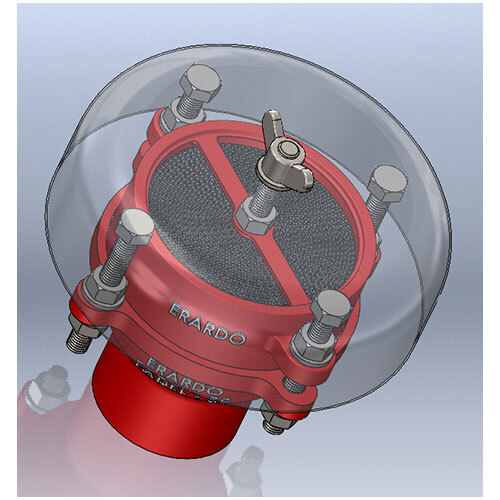
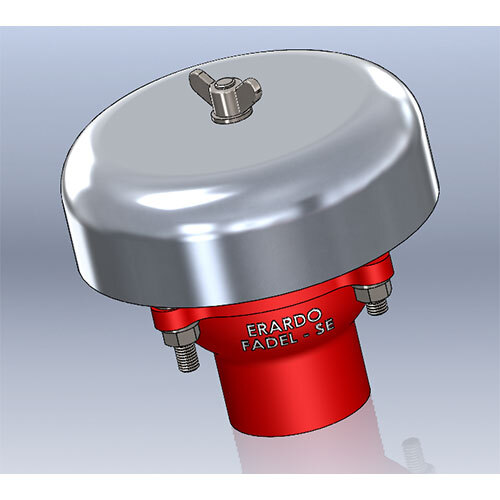
Model No: FADEL-SE
ERARDO make Screw End/Thread End Flame Arrester are used in small Dia Pipe line.
| Manufacturing Std | API 2000 7th Edition |
| Testing Standard | ISO 16852, IS 11006, BS 7244, EN 12874, IS 16485 |
| Sizes | 0.5 inch to 2 inch |
| Body Construction | A216 Gr. WCB, SS 304 (A351 Gr. CF8), SS 316 (A351 Gr. CF8M), Aluminium LM-6 (As per requirement) |
| End Connection | BSP (Male/Female), NPT |
| Gas Group | IIA, IIB, IIC |
Robust Safety DesignFeaturing a durable body made from aluminium, carbon steel, or stainless steel, this flame arrester withstands corrosive environments. The stainless steel element efficiently quenches flames, ensuring optimal protection for vent pipes, tanks, and process equipment. Its cylindrical construction and thread end options allow seamless integration into various systems.
Easy Maintenance and InspectionRoutine checks and cleaning are simple thanks to the easily removable cover. Service personnel can quickly inspect or replace the flame element, minimizing downtime. This design ensures longevity and consistent performance, especially important for industrial safety standards.
Flexible Installation and Versatile ApplicationsAvailable in BSP and NPT thread standards, with both male and female connections, the arrester supports inline or end-of-line mounting. It is suitable for hydrocarbon vapors, gases, and solvents, protecting against flame transmission on vent lines in diverse industries, including chemical plants, storage terminals, and refineries.
FAQ's of Screw End/Thread End End of Line Flame Arrester:
Q: How is the Screw End/Thread End End of Line Flame Arrester typically installed?
A: This flame arrester is designed for threaded pipe mounting, with BSP or NPT standards, and can be installed either inline or at the end of vent pipes. Vertical orientation at the vent termination is preferred for optimal performance.
Q: What is the process for maintaining and inspecting the flame arrester?
A: Maintenance is straightforward: the cover can be easily removed for quick inspection and cleaning of the flame element. The element itself is replaceable, allowing users to service or swap it as needed without removing the entire assembly from the pipeline.
Q: Where can this flame arrester be used?
A: It is suited for end-of-line protection on vent pipes, tanks, and process equipment in industries dealing with hydrocarbon vapors, gases, or solvents. Typical applications include chemical plants, storage facilities, and refineries requiring prevention of flame propagation.
Q: What benefits does this flame arrester provide to system safety?
A: By preventing flame transmission from external ignition sources, it safeguards equipment and personnel. The device also offers high corrosion resistance, reliability under varying conditions, and requires minimal ongoing maintenance, supporting safer operations.
Q: When should the flame arrester element be replaced?
A: The flame element should be inspected periodically as part of standard maintenance routines. If significant blockage, wear, or damage is noted during inspection, the element should be promptly replaced to ensure continued protection.
Q: What materials and coatings are available for the body and element?
A: The body is available in aluminium, carbon steel, or stainless steel (304/316), and the standard flame element is stainless steel. Alternative alloys can be supplied on request. Bodies can be epoxy powder-coated or supplied with an optional stainless steel finish for added durability.
Q: What standards does this flame arrester comply with?
A: It meets EN ISO 16852 requirements or equivalent NA/IS/O standards, ensuring it provides certified and tested flame arresting performance suitable for hazardous environments.