Model No: FADEL
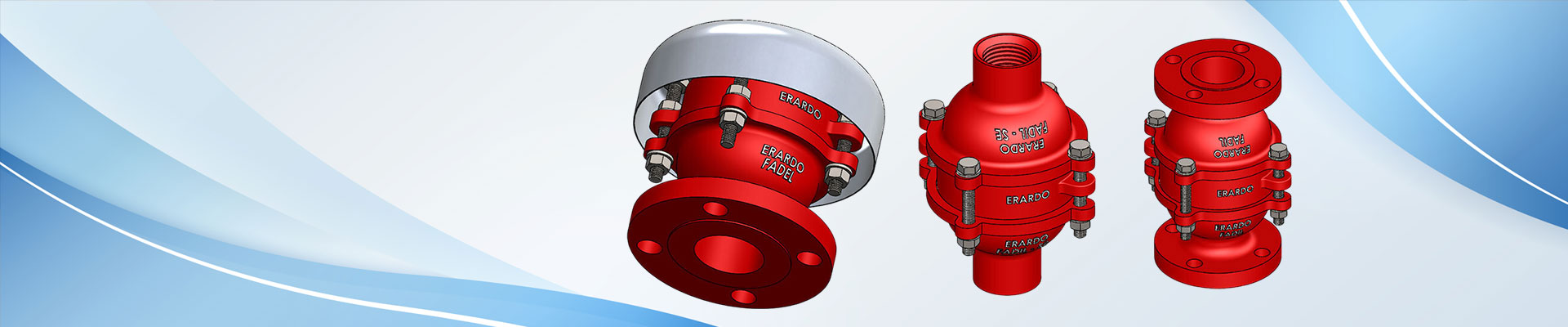
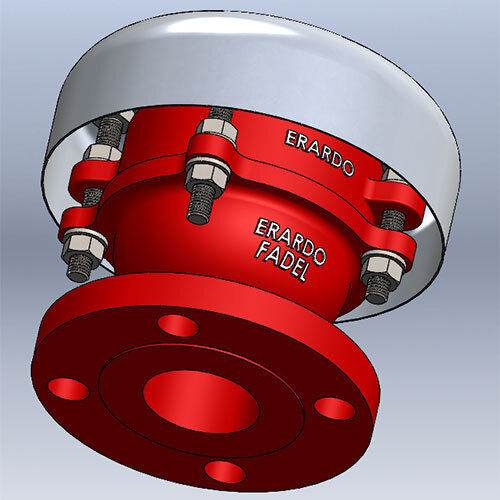
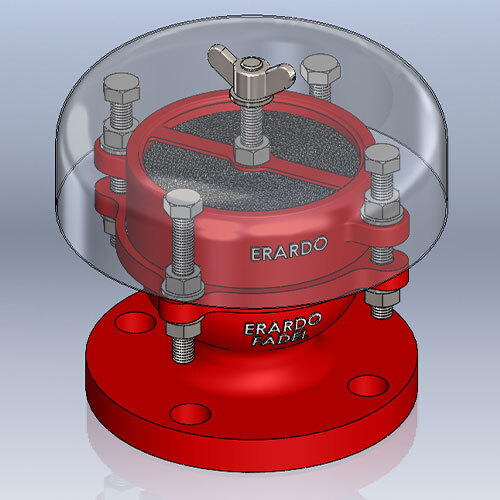
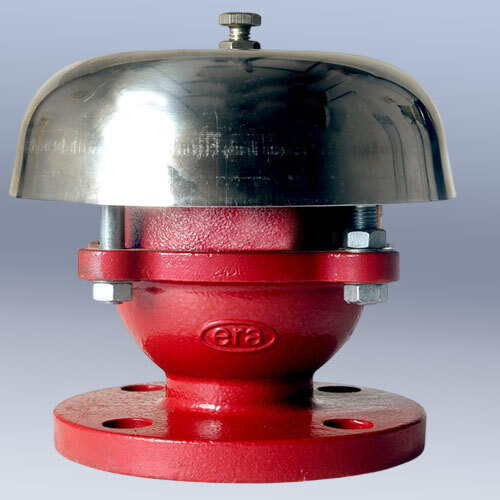
ERARDO make End of Line Deflagration flame arrestor is suitable for quenching subsonic flames and should be located at the end of a pipeline or exit from a vessel or Tank. It should be installed in the horizontal plane and is not for use with pressure relief valves or pressure-vacuum relief valves.
| Specification | Details |
| Manufacturing Standard | API 2000 7th Edition |
| Testing Standard | ISO 16852, IS 11006, BS 7244, EN 12874, IS 16485 |
| Sizes | 0.5 inch to 24 inch |
| Body Construction | A216 Gr. WCB, SS 304 (A351 Gr. CF8), SS 316 (A351 Gr. CF8M), Aluminium LM-6 (As per requirement) |
| End Connection | API Class 150, 300, 600, PN, DIN (As per requirement) |
| Gas Group | IIA, IIB, IIC |
A weather hood and screen protect the vent and restricts dust, wind, rain, or insects from entering and degrading the efficacy of the product.
Era Technologies is Prime Indian Manufacturer & Exporter of Erardo Make Flame Arrester, Storage tanks other vessels containing flammable and explosive chemicals and mixture are prevalent in chemical process industries plants Flame Arrester is installed on such equipment to prevent potential hazard associated with flammable and explosives materials Flame Arrester can stop the spread of a fire limit the spread of an explosive event protect potentially explosive mixtures from igniting and confine a fire within an enclosed controlled location
A flame arrester works by forcing a flame front through very narrow channels MESG has travels through the device but the passages are so narrow that the flame can no longer be maintained
Our world wide Presence in Malaysia, Singapore, Indonesia, Thailand, Vietnam, UAE, Saudi Arabia, Oman, Kuwait, Iran, Egypt, Yemen, Qatar, Bahrain, Turkey, Libya, Iraq, Syria, Algeria, Vietnam, Venezuela, Chile, Colombia, Nigeria, Kenya
Classification as per Installationa
Deflagration type
Special Features
Design of Flame Arrester such that it gives Maximum Flow and low pressure Drop
- Easy cleaning less clogging and less Maintenance
- Removable element design allows for easy inspection cleaning and replacement
- Flouropolymer coated Body and hardware are provided for outstanding corrosion and chemical resistance
- Provision available for Standard Temperature port in all type of Flame Arrester
- Flame Arrester are available in A216 Gr WCB SS 304 and SS 316 and Flame CageElement will be in SS 304 SS 316 SS 316Ti and Hastelloy C
- Flame Arrester designed and Manufactured as per API 2000 7th Edition and Tested as per ISO 16852
Erardo-FADEL
1 Body of Flame Arrester is Invest Casting Lost Wax Process
- 2 Size available 15 NB to 600 NB
- 3 IIA IIB IIC Gas Group
- 4 Available in A216 Gr WCB Cf8 CF8M CF3 CF3M and Aluminium LM6
- 5 Flame Element available in SS 304 SS 316 SS 316Ti Hastelloy C
FAQs of End of Line Flame Arrester:
Q: What is the material used for End of Line Flame Arrester?
A: End of Line Flame Arrester is made up of WCB/SS 304/SS 316 material.
Q: What is the warranty period of End of Line Flame Arrester?
A: End of Line Flame Arrester comes with a warranty of 1 year.
Q: What is the temperature range of End of Line Flame Arrester?
A: End of Line Flame Arrester can withstand temperature ranges between -20 to 150 Celsius.
Q: What is the weight of End of Line Flame Arrester?
A: End of Line Flame Arrester weighs 0.5 Kilograms (kg).
Q: What is the application of End of Line Flame Arrester?
A: End of Line Flame Arrester is used in Oil, Gas, Pharmaceutical, and Chemical industries.
Optimized for Safety in Hazardous EnvironmentsDesigned specifically for end-of-line installation, this flame arrestor reliably halts flame fronts from entering venting systems. Its high-efficiency stainless steel element offers robust flame quenching, making it ideal for applications involving storage tanks, fuel vapors, and chemical plant operations. Integrated weatherhood and corrosion-resistant construction extend its application to outdoor and demanding industrial sites.
Versatile Material and Connection OptionsThis product is available in carbon steel, stainless steel (304/316), and aluminium, with flanged or threaded connections suitable for ANSI, DIN, or BS standards. Covering diameters from 50 mm up to 600 mm, it fulfills a broad spectrum of technical and environmental requirements, ensuring performance and compliance across projects.
Low Pressure Drop and Simple MaintenanceEngineered for minimal flow resistance, the flame arrestor's typical pressure drop is 20-80 mbar at rated flow. Its user-friendly design allows easy access for frequent inspection and cleaning, supporting long service life and operational safety. Replaceable flame elements make maintenance straightforward, maximizing uptime.
FAQ's of End of Line Deflagration flame arrestor:
Q: How does an end-of-line deflagration flame arrestor enhance safety in venting systems?
A: The flame arrestor acts as a barrier that stops flame fronts from propagating back into storage tanks or vent pipelines, significantly reducing the risk of explosions caused by atmospheric ignition. Its crimped stainless steel element efficiently quenches flames, making it suitable for hazardous vapors and ensuring workplace safety.
Q: What materials are used in the construction of this flame arrestor, and what are their benefits?
A: The body can be made from carbon steel, stainless steel (304/316), or aluminium, providing flexibility based on corrosion resistance, strength, and compatibility with various chemicals. The flame element itself is manufactured from durable AISI 304/316 stainless steel, ensuring high performance and long operational life.
Q: When should a flame arrestor undergo maintenance, and what does the process involve?
A: Periodic inspection and cleaning are recommended, especially in environments with high particulate or contaminant exposure. The design enables easy access to internal components, allowing users to quickly clean or replace the flame element per manufacturer guidelines to maintain optimal operation.
Q: Where is this flame arrestor typically installed in an industrial setting?
A: It is mounted at the termination points of vent pipes or tanks-such as on storage tank vents, fuel vapor recovery lines, chemical processing vents, and exhaust stacks-serving as the final line of defense before vapors are released to the atmosphere.
Q: What is the process behind the flame arrestor's operation in preventing ignition hazards?
A: As gases pass through the arrestor's crimped ribbon element, heat from any ignited flame is absorbed and dissipated, lowering the gas temperature below its ignition point. This passive, non-actuated design prevents flames from traveling backward into protected equipment or storage areas.
Q: How does the integrated weather hood benefit end users?
A: The domed weather hood shields the arrestor from rain, debris, and harsh outdoor conditions, preserving its effectiveness and minimizing maintenance. This feature makes the unit ideal for external installations in challenging environments.
Q: What are the primary usage benefits for industries employing this device?
A: The arrestor provides reliable deflagration protection for hazardous vapor systems, ensures regulatory compliance, and extends equipment life with its corrosion-resistant construction. Industries benefit from reduced explosion risk, straightforward maintenance, and adaptability for a variety of standards and installation configurations.